


Breaking: Trump regime cuts $260 million in Medicaid funds to Minnesota & stops new durable medical equipment supplier enrollment nationally for 6 months to supposedly "combat fraud"
Wed, 02/25/2026 - 5:31pm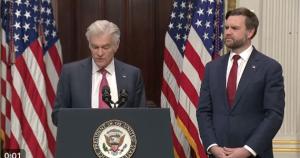
Today at the White House, Vice President J.D. Vance, Secretary of Health and Human Services (HHS) Robert F. Kennedy, Jr., and Administrator of the Centers for Medicare & Medicaid Services (CMS) Dr. Mehmet Oz announced new steps to crack down on fraud in Medicare and Medicaid to protect patients and taxpayers and improve affordability. The actions include deferring $259.5 million of quarterly federal Medicaid funding in Minnesota to prevent payment of questionable claims while further investigation is completed; a nationwide moratorium on Medicare enrollment for certain Durable Medical Equipment, Prosthetics, Orthotics, and Supplies (DMEPOS) suppliers; and a nationwide call to action for Americans to support fraud prevention, including stakeholder input on how CMS can continue to expand and strengthen its efforts.
...Medicaid is funded jointly by states and the federal government. CMS is required to ensure Medicaid funds are spent lawfully and that states maintain effective systems to detect, prevent, and recover improper payments. When those obligations are not met, CMS has the authority and responsibility to withhold, defer, or disallow federal funds. In January 2026, CMS notified Minnesota of its intent to withhold federal funds until it was satisfied with the state’s corrective action plan to address its program integrity shortcomings. CMS also notified Minnesota of its intent to conduct a review focused on program integrity to ensure federal funds were not going toward questionable claims.
CMS’ review of Minnesota’s Medicaid spending for the fourth quarter in FY 2025 resulted in a deferral of $259,505,491 in federal matching funds. This includes state expenditures of $243.8 million for unsupported or potentially fraudulent Medicaid claims and $15.4 million related to claims involving individuals lacking a satisfactory immigration status. The agency utilized both traditional financial management approaches and new program integrity oversight strategies to identify unusually high spending and rapid growth in certain service areas, including:
- Personal care services;
- Home and community-based services; and
- Other practitioner services.
CMS is deferring those federal funds to protect taxpayer dollars while ensuring the state has the opportunity to respond and provide information and documentation during the ongoing review. Should Minnesota fail to clean up its significant program integrity vulnerabilities or demonstrate that the expenditures are allowable, CMS may defer more than $1 billion in federal funds over the next year. CMS also continues to intensely oversee Minnesota’s efforts to carry out its corrective action plan to address the underlying causes of fraud, waste, and abuse within the state.
...CMS is taking decisive steps to prevent fraudulent Medicare billing by durable medical equipment, prosthetics, orthotics, and supplies (DMEPOS) companies. A six-month moratorium on new Medicare enrollment for certain DMEPOS suppliers builds on CMS’ stopping more than $1.5 billion in suspected fraudulent billing in this area last year. The DMEPOS supplier enrollment moratorium will allow CMS to explore additional safeguards to further mitigate longstanding instances of fraud, waste, and abuse perpetrated by certain DMEPOS companies. It applies to all applications for initial enrollment and changes in majority ownership for medical supply companies.
CMS also plans to publish information on providers/suppliers whose participation in the Medicare program has been revoked, including their National Provider Identifier and the reason for the revocation. This additional transparency will allow patients and payers, including private insurers, to understand which providers have been subject to such administrative enforcement action by the government.
...CMS is looking to stakeholders to provide input, based on their experience and knowledge, on additional ways the agency can tackle fraud prevention to help inform the development of a possible future rule under CMS’ Comprehensive Regulations to Uncover Suspicious Healthcare (CRUSH) initiative. The CRUSH request for information (RFI) seeks input from a broad range of stakeholders – including states, providers, suppliers, payers, technology companies, patient advocates, beneficiaries, and others – on ways to strengthen CMS’ ability to prevent, detect, and respond to fraud, waste, and abuse, and program inefficiencies in Medicare, Medicaid, the Children’s Health Insurance Program (CHIP), and the Health Insurance Marketplace. Stakeholders can provide input on both existing authorities, as well as ideas for new regulatory approaches.
For what it's worth, over 1.17 MILLION Minnesotan are enrolled in Medicaid, of which:
- 2 in 5 (43%) are children
- 2 in 7 (29%) live in a rural area
- 1 in 7 (14%) have three or more chronic conditions
In Minnesota, Medicaid covers:
- 34% of all births
- 32% of all children
- 16% of all adults age 19 - 64
- 42% of all working-age adults with disabilities
- 13% of all Medicare beneficiaries
- 53% of all nursing home residents
TOTAL Medicaid spending in Minnesota is ~$18.5 BILLION per year, with 64% of that coming from the federal government. This means that Dr. Oz just cut over 14% of Minnesota's annual Medicaid budget.
For those wondering what "DMEPOS" includes:
Durable Medical Equipment, Prosthetic Devices, Prosthetics, Orthotics, & Supplies
Medicare Part B covers medically necessary equipment, devices, and supplies falling under several benefit categories defined under section 1861 of the Social Security Act, commonly referred to as DMEPOS:
- DME (such as hospital beds, wheelchairs, ventilators, and oxygen equipment)
- Prosthetics and Orthotics (artificial legs, arms, and eyes, and leg, arm, back and neck braces)
- Prosthetic Devices (such as ostomy bags, which replace an internal body organ)
- Surgical Dressings, and Splints, Casts, and Other Devices used for Reduction of Fractures and Dislocations
- Therapeutic Shoes (extra-depth shoes with inserts or custom molded shoes with inserts for an individual with diabetes)
- Lymphedema Compression Treatment Items (standard and custom fitted gradient compression garments and other lymphedema compression treatment items).
Most of the DMEPOS items and services listed above are furnished by Medicare-enrolled DMEPOS suppliers, who are responsible for submitting Medicare claims for the items and services to the DME Medicare Administrative Contractors (MACs). Medicare claims for some of the items and services listed above are processed by other MACs (such as splints, casts, and other items and services furnished by physicians, and items and services furnished by hospital outpatient departments or home health agencies).
All I'll add for now is that I seeing a lot of "potential," "suspected" and "questionable" caveats in the press release when it comes to claims of "fraud."
UPDATE: via Edwin Park, Health Policy Research Professor at the Center for Children and Families (CCF) at Georgetown University’s McCourt School of Public Policy:
As my colleague Andy Schneider explained there is a complex administrative process CMS has to follow to preemptively withhold or retrospectively disallow federal #Medicaid funding for a state like MN. It would be unlawful to just unilaterally halt federal funding.
Advertisement


